Work Strategic Banking Corporation of Ireland
Moving Ireland's state backed SME lending from paper to self service
A guided self service portal where SMEs check eligibility and apply, and lenders and SBCI manage loans in one place.
Project summary
- Lent through Hub schemes in 2024
- €570M
- Businesses supported
- 4,794
- Lending partners live
- 40+
My role
I'm the embedded product designer on the Presidio (formerly Ergo) delivery team. I co-run requirements workshops with SBCI, design every new scheme's flows and maintain the Hub's design system.
- Client
- Strategic Banking Corporation of Ireland
- Timeline
- 2023 to 2025, live and growing
- Team
- Presidio delivery team (PM, BA, engineers), SBCI stakeholders, lending partners
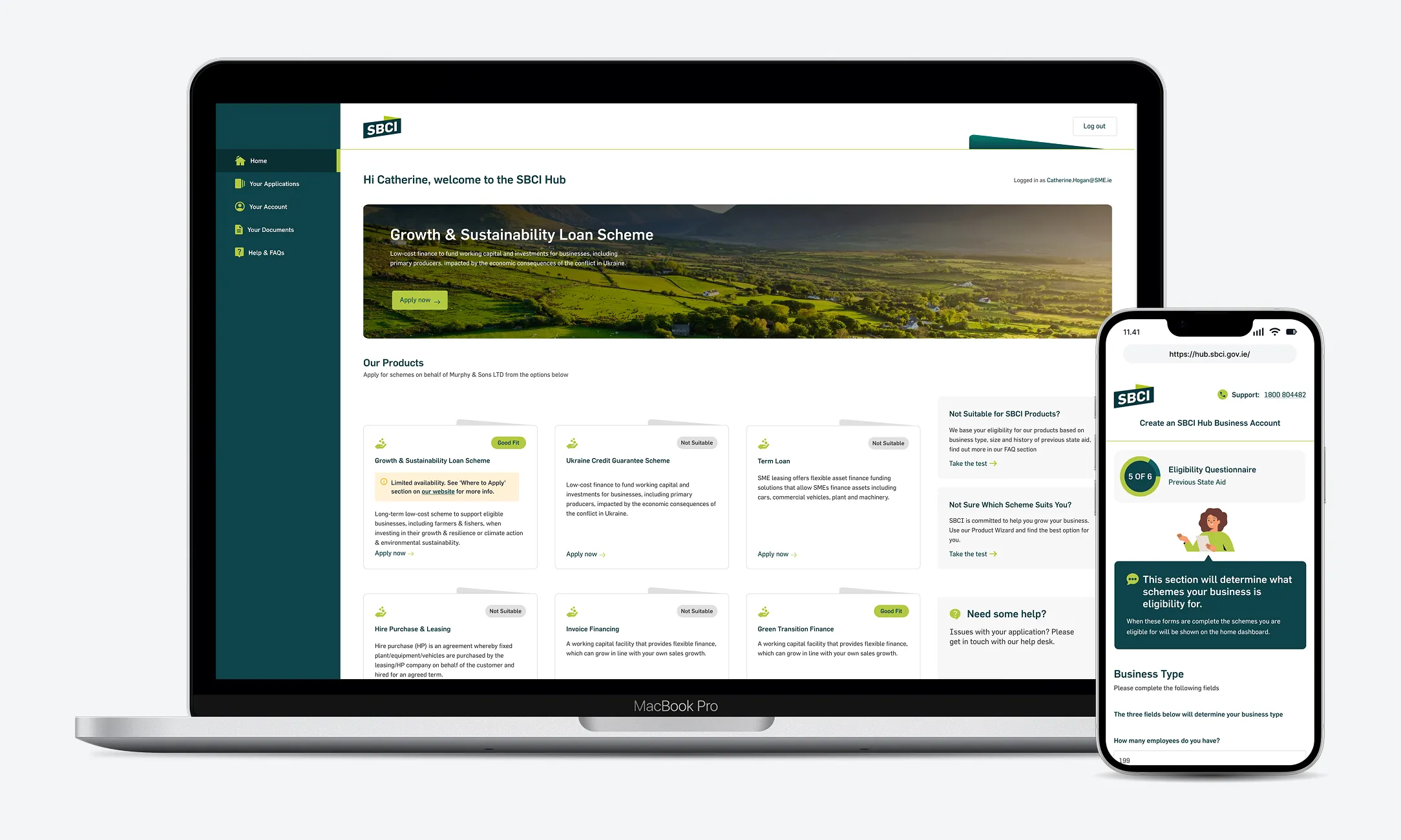
Paper forms most SMEs couldn’t finish alone
Getting an SBCI loan meant a paper process that assumed financial and admin confidence many SME owners don’t have. Lenders and SBCI managed loans through manual, disconnected processes, and every new scheme started from scratch.
All of this in regulated, audited finance, with government and EU rules that change per scheme, 40+ lending partners and public sector accessibility obligations.
My role
What I owned
- Co-running requirements workshops with SBCI for every new scheme
- Applicant journeys, eligibility flows and lender tools, from sketch to sign off
- Moving the design system from Adobe XD to Figma and maintaining it
- Testing builds against the designs with engineering
What the wider team owned
- Scheme rules and eligibility criteria (SBCI)
- Delivery planning and scope (PM, BA)
- Build and integrations (engineering)
Three decisions that shaped the Hub
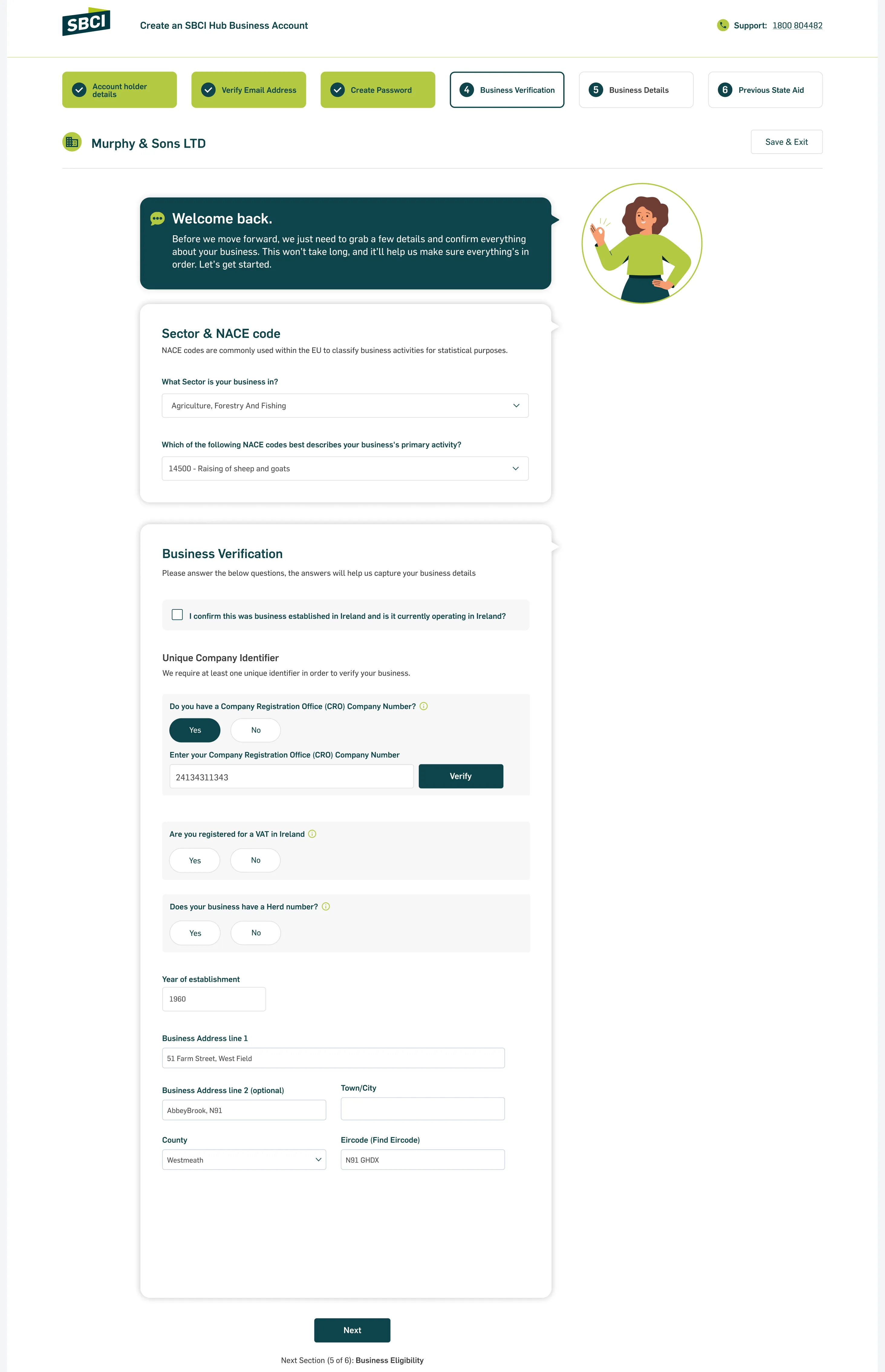
Guide applicants step by step, don't digitise the paper form
- The tension
- Putting the paper form online was the fastest route, but the paper form was what caused the errors and drop off.
- Options on the table
- One long web form that mirrors the paper
- A guided flow with progress, plain English and save as you go
- What I chose and why
- The guided flow, designed for a first time applicant with no finance background. Six clear steps, one topic at a time, a friendly guide explaining what's needed, and save and exit at any point.
- What we traded away
- More screens and more copy to agree with SBCI for every scheme.
Build the design system before scheme two, not after scheme five
- The tension
- Each scheme had a deadline and bespoke screens are always quicker the first time. But the Hub was clearly going to host many schemes.
- Options on the table
- Design each scheme on its own and tidy up later
- A modular component library, so new schemes become configuration
- What I chose and why
- The component library. I moved it from Adobe XD into Figma, rebuilt it around reusable form patterns, and documented every state with engineering, including Hub specific ones like fields that show the old value when a lender edits an application.
- What we traded away
- Early time that could have gone into visible features. It paid back quickly, as new schemes now start from proven patterns.
-
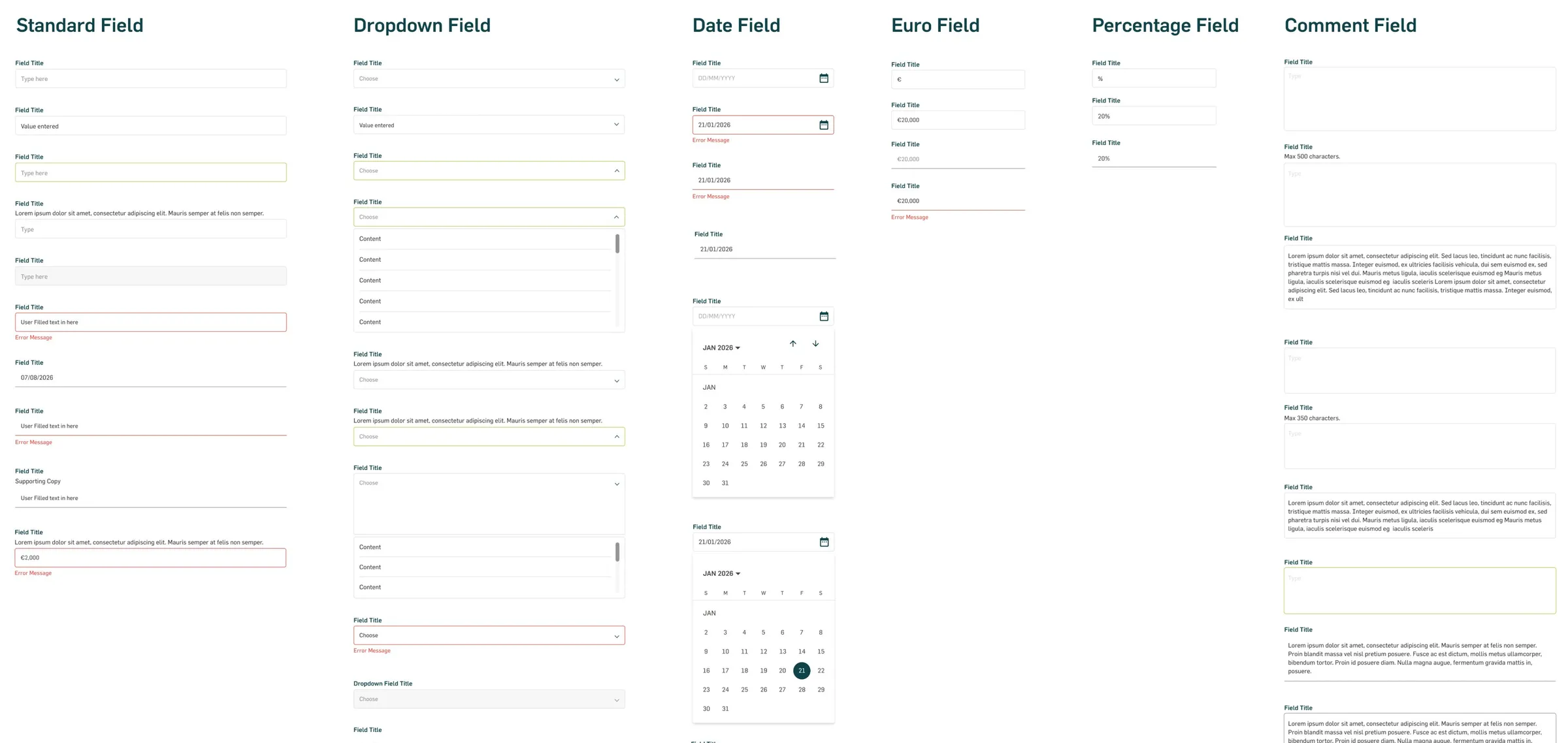 Fields, with every state (opens full size)
-
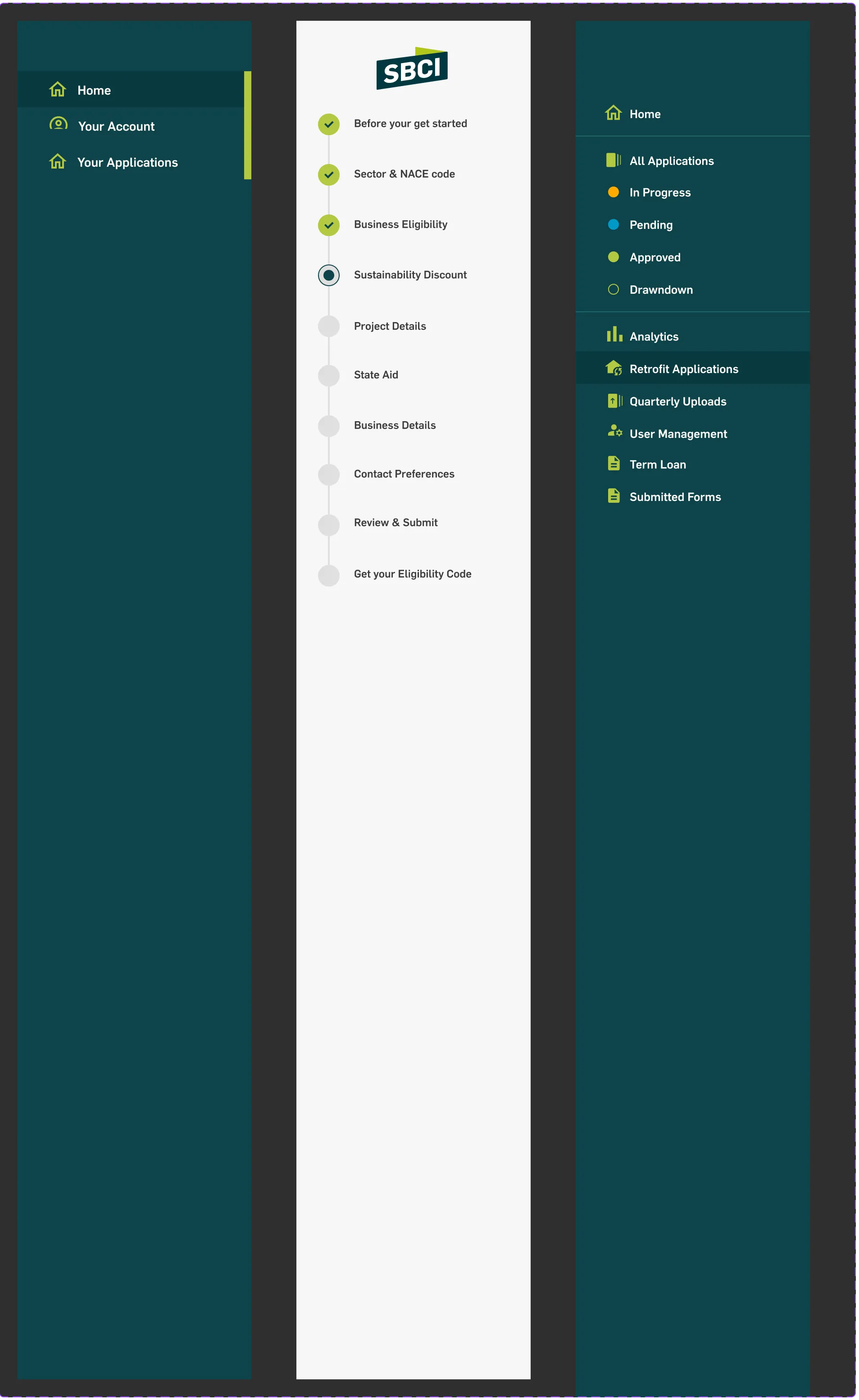 Applicant and lender navigation (opens full size)
-
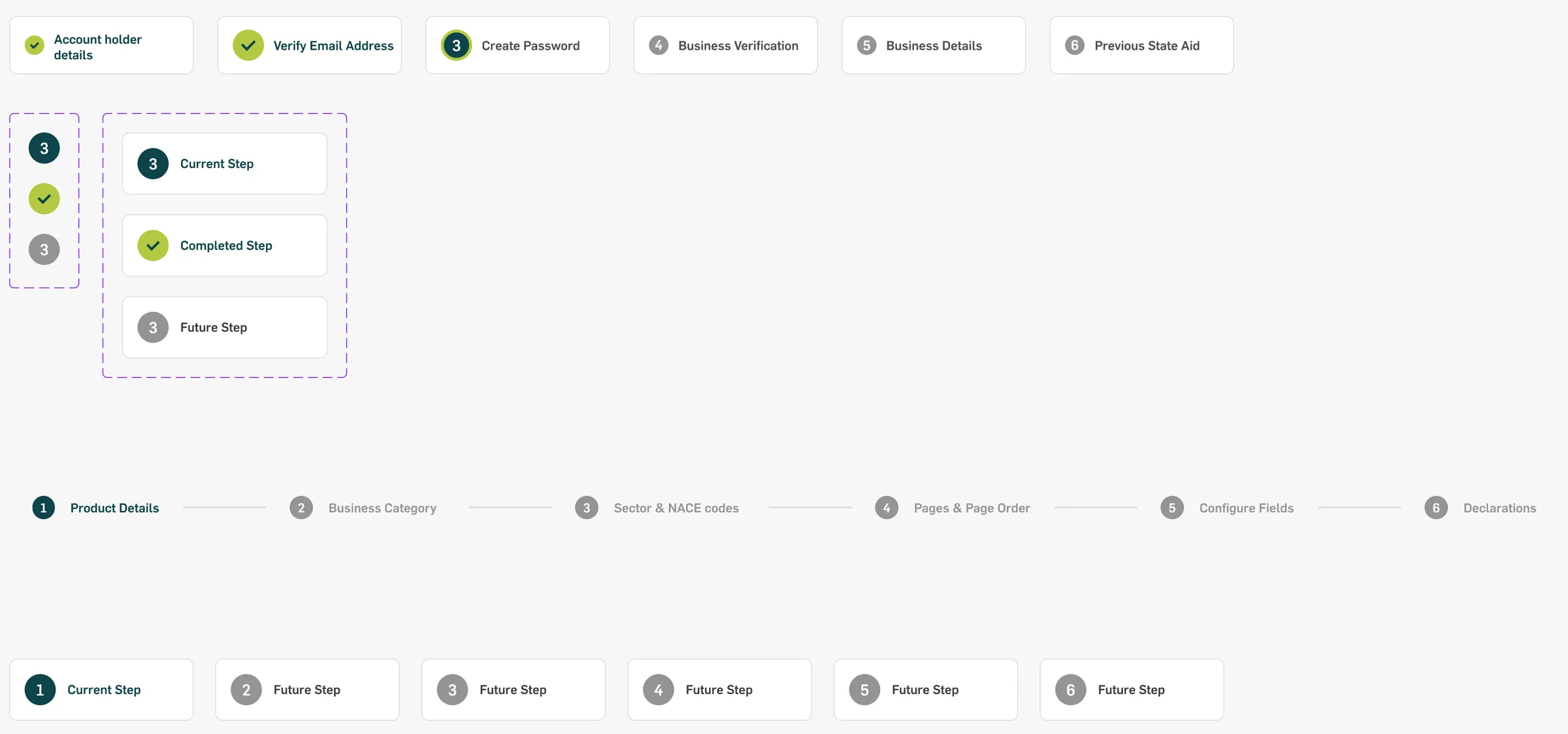 Stepper states (opens full size)
-
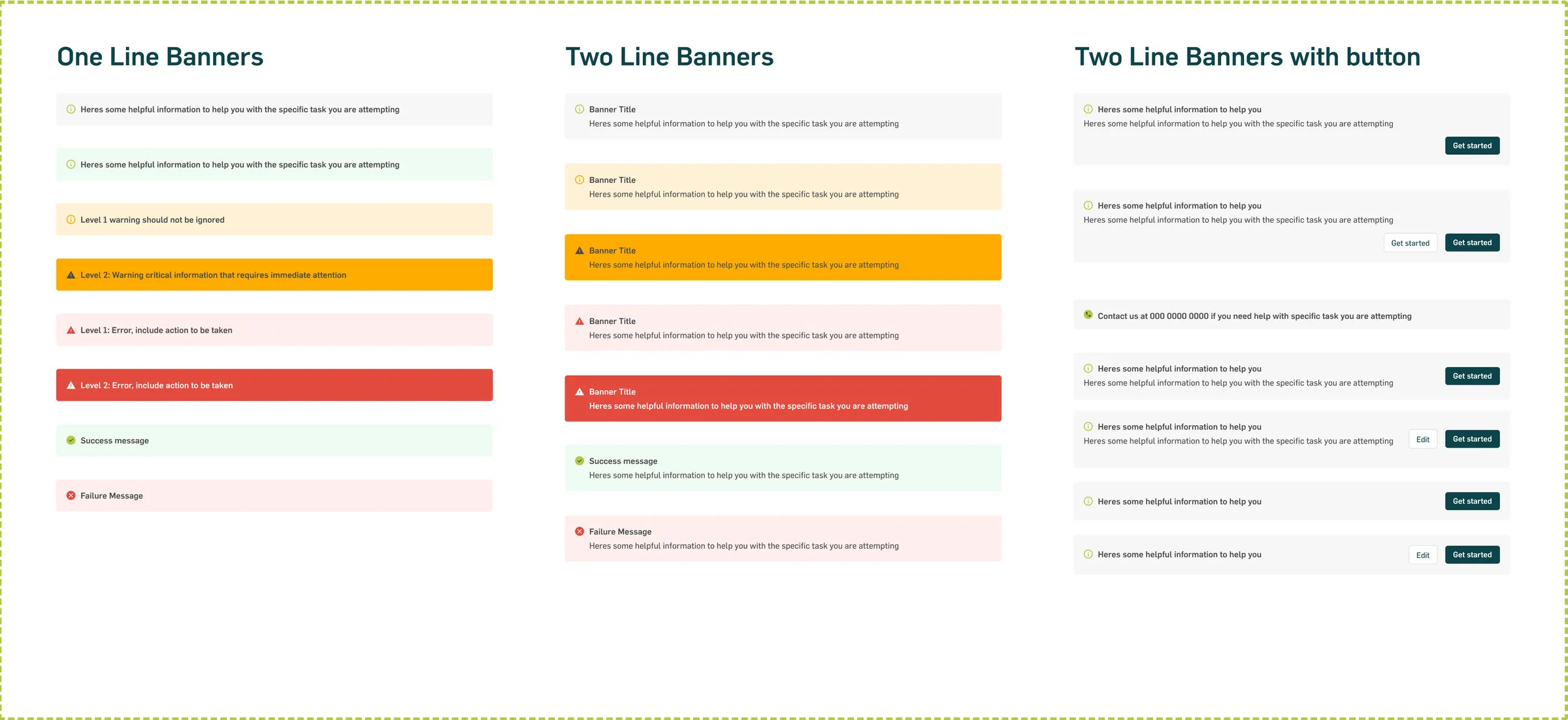 Banners by severity (opens full size)
-
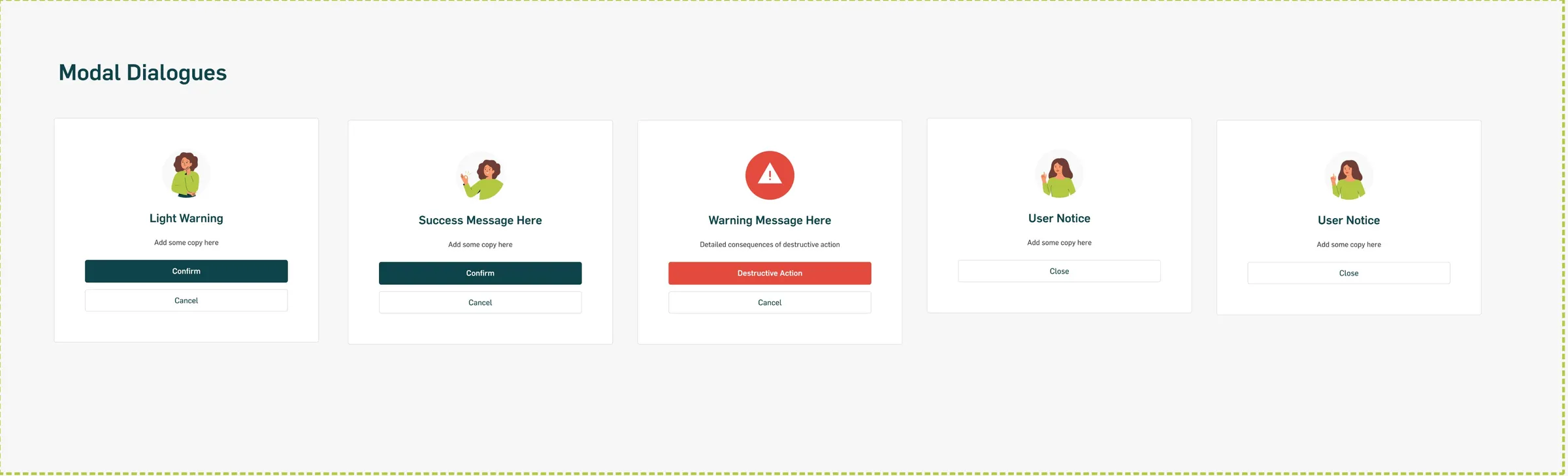 Dialogues with the guide character (opens full size)
-
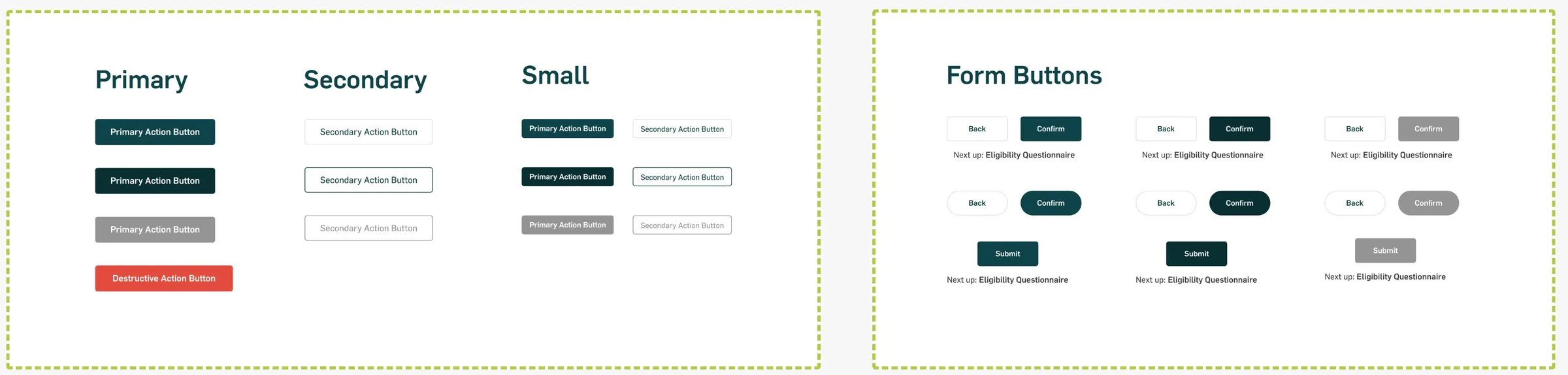 Buttons and their states (opens full size)
Separate tools for lenders, built around their daily tasks
- The tension
- Applicants and lenders see the same loans, so one shared interface was tempting. But lenders work through high volumes and need speed, not hand holding.
- Options on the table
- One interface for everyone, with permissions
- Purpose built lender views around the tasks they repeat
- What I chose and why
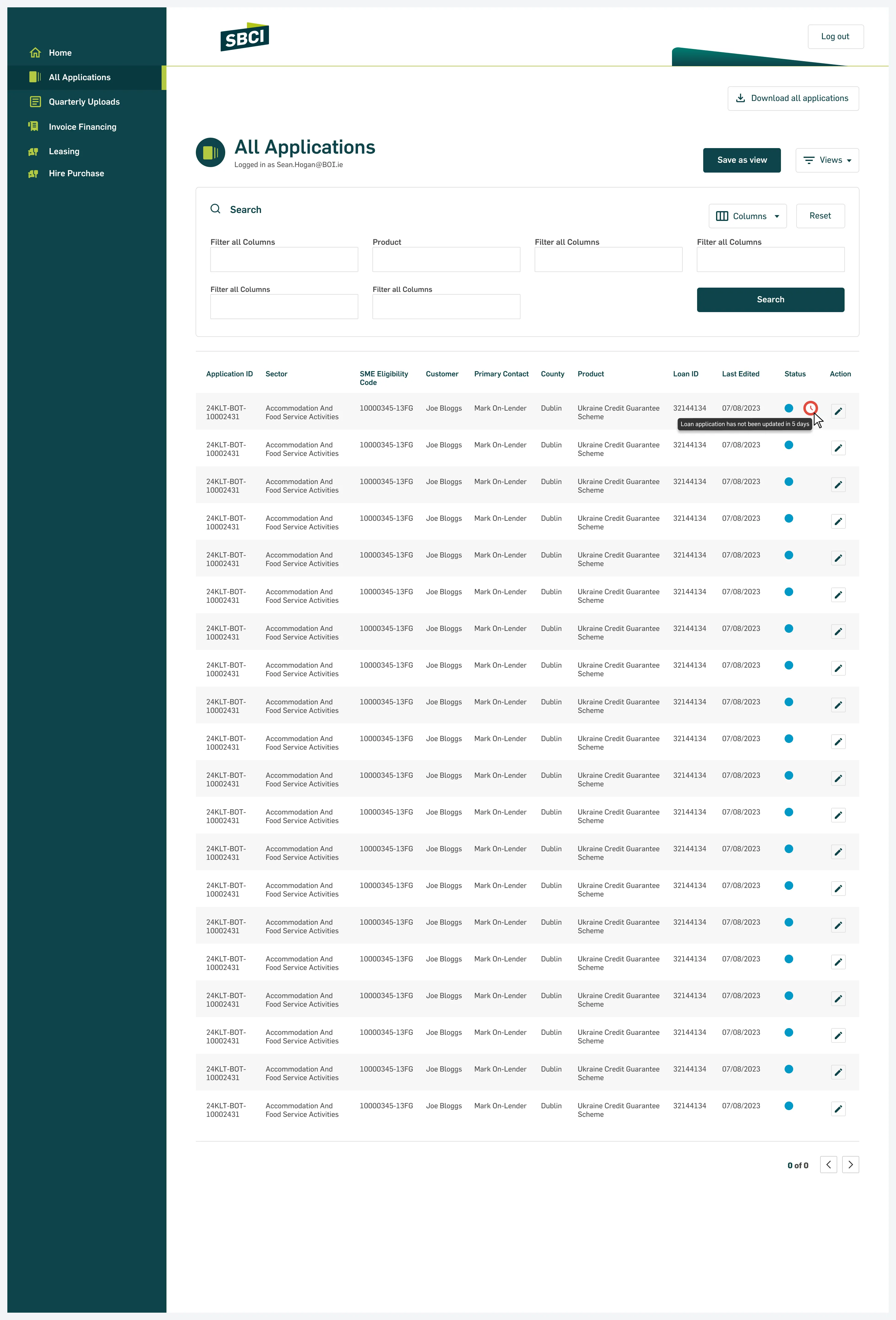
- Dedicated lender tools. Workshops showed lenders mostly need to spot loans that need attention and find an SME's details fast, so the view leads with search, saved views and status, and flags applications that have gone quiet.
- What we traded away
- Two experiences to maintain, kept manageable by the shared design system.
Borrowing proven patterns from established lenders
I audited loan and mortgage journeys from AIB, KBC and Global Payments. Four patterns came up again and again and became the backbone of the Hub: progressive disclosure, calculator widgets, review and confirm steps, and clear eligibility signposting.
The rest of the research happens in the room, in a workshop with SBCI at the start of every scheme.
A repeatable loop for every new scheme
The Hub is a live product, so every new scheme runs the same loop, taking a few weeks to a couple of months:
- Workshop scheme rules and eligibility with SBCI
- Design new flows on the existing system
- Sign off with SBCI stakeholders
- Build alongside engineering, testing against the designs
- Learn from the live product for the next scheme
Schemes built this way include the Growth and Sustainability Loan Scheme, the €500M Home Energy Upgrade Loan Scheme and €50M Green Transition Finance.
€570M lent through the Hub in 2024
SMEs check eligibility, apply and track applications online, and lenders manage loans in one place. In 2024, schemes on the Hub delivered €570M to 4,794 businesses across 40+ lending partners.
What I’d do differently
- On a live product, the system matters as much as any screen. It’s why a new scheme is now mostly configuration.
- The least confident user sets the bar. If a first time applicant can finish without phoning for help, everyone can.
- Next time I’d push for short usability sessions with real SME applicants, not just SBCI stakeholders, on new scheme flows.